


SHOW
ARCHIVE
Women who want to marry. Perhaps
Dust and misunderstandings form every day, and every day a good wife must bring all things back to perfection, as when they were in God's mind
collective dramaturgy
direction
Stefania Tagliaferri
assistant directors
Verdiana Vono, Luisa Zanin
with
Alice Corni, Silvia Paganoni,
Maria Chiara Canepearo, Sauvage Rolla,
Giulia Sartore, Francesca Zanin
lighting design
Verdiana Vono, Ivan Gerbore
scenic elements
Angelini Rigollet
costumes
Mariarosa Rosso
stage photos
Valentina Nota, Francesca Nota
produzione Palinodie 2014
Nel novembre 2015 Donne che si vogliono sposare. Forse è stato riallestito all’interno delle iniziative legate alla Giornata internazionale per l’eliminazione della violenza contro le donne, selezionato per l’attenzione con cui affronta il tema della violenza psicologica sulle donne
Press
Uno spettacolo ironico ed elegante che racconta con un velo di leggerezza temi attualissimi, nonostante l’ambientazione nel passato […] è questa l’Italia che vorrei avanzasse, questa l’Italia di cui vado era all’estero.
Irene Ciuci, post Facebook 30 dicembre 2014
Nell’arco di poco più di un’ora il salotto si trasforma da claustrofobica sede di scuola di femminilità a luogo di confessione e confronto, rivelando dietro le ombre interiori delle ragazze quelle della marmorea madre. Il perfetto e spietato meccanismo del “moglificio domestico” rivela tutte le sue crepe, fino a crollare su stesso: ma dalle rovine si può anche risorgere, mettersi sulla strada, e ricominciare a vivere, a camminare.
Miriam Begliuomini, Gazzetta Matin, 5 gennaio 2015
Synopsis
There are a million taut threads here.
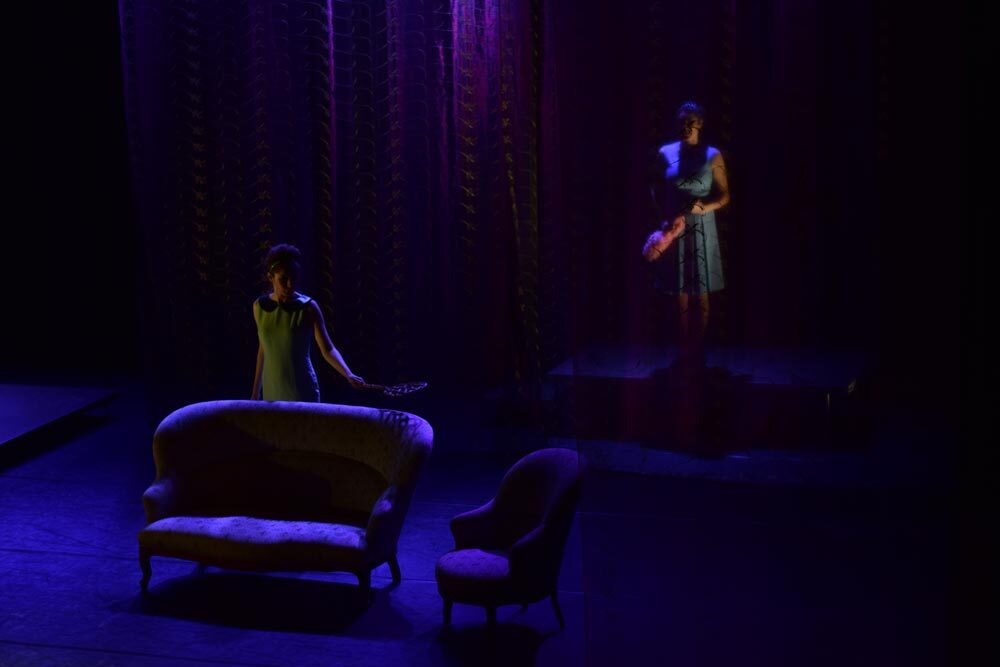
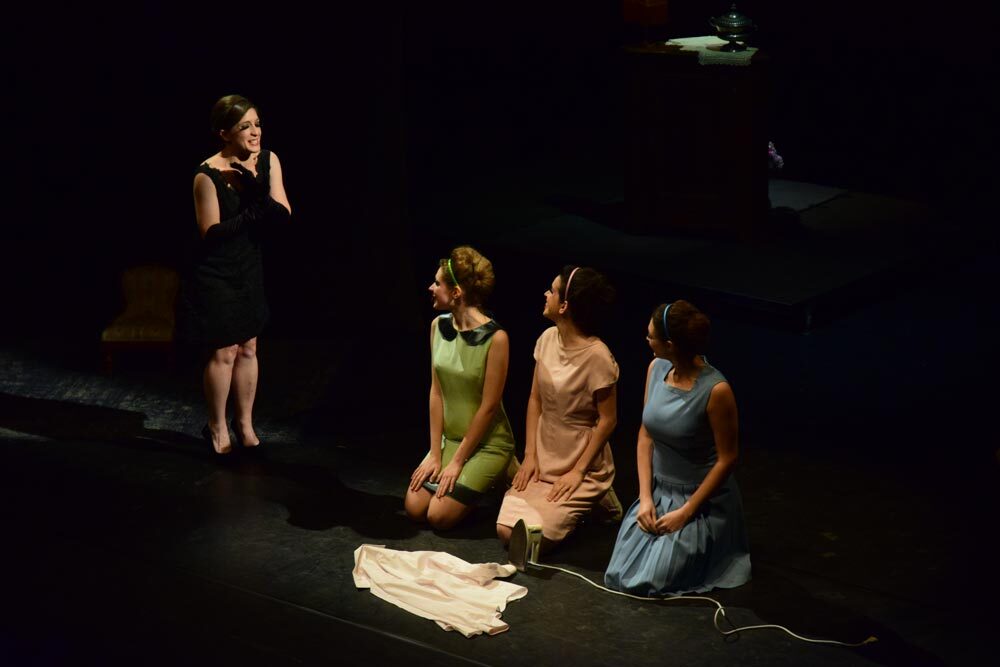
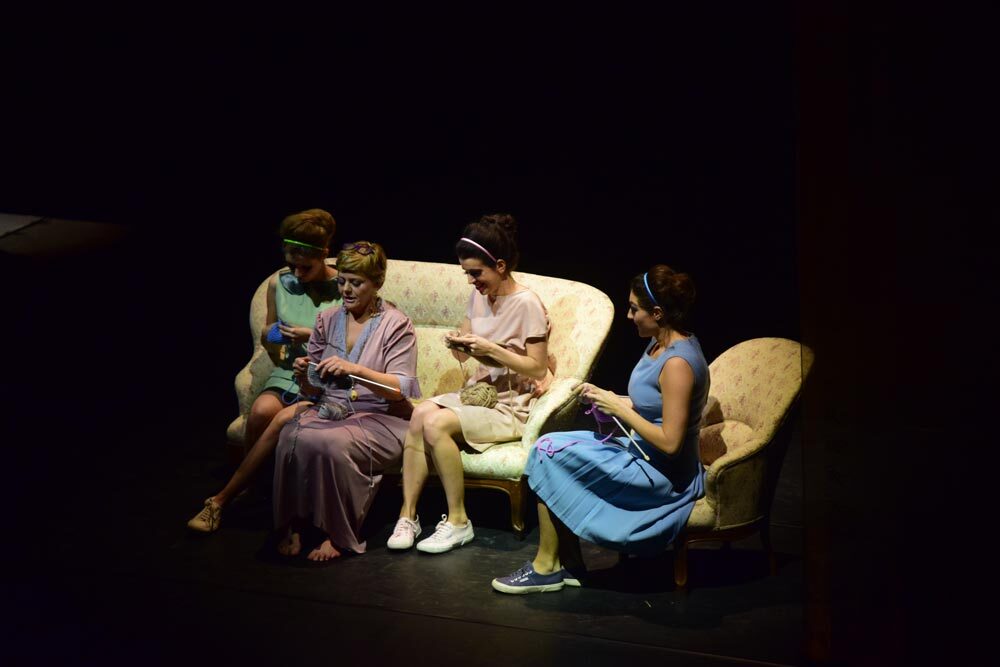
The house that the play's protagonists inhabit contains, reassures and, at the same time, imprisons. Set in a generic past that winks at the American 1950s, Women Who Want to Marry. Perhaps is the story of five characters facing the eternal question of self-definition within and despite the core of belonging.After the death of their father, Brigitte, Grace and Liz are instructed by Mother to become perfect wives: lovable and desirable women devoted to cooking and the art of pleasing their husbands. The world outside is cleverly filtered: after a year of school, Mother institutes air time, the only opportunity for the girls to go out and meet suitable candidates. A counterbalance within the family unit is Auntie, a poetic, nocturnal woman who rejects the model of feminine perfection professed by her sister-in-law, leaving home and putting her life on the line to turn the ideals, freer of which she champions, into reality. A closed, suffocating universe that implodes the moment Mother realizes that she no longer has control over either her daughters' lives or her own. At the failure of this pattern of certainties, the characters decide to confess all truths to each other, starting with the most cumbersome.
To view this content, you need to allow the following cookies: statistiche .
Click here to modify the permissions
Note
Come i personaggi anche lo spettacolo si finge a lungo ciò che non è: non è teatro dell’assurdo, né commedia leggera, non mito, non tragedia anche se i riferimenti a queste tradizioni teatrali sono espliciti nel testo.
Accettare di essere vive dà alle protagoniste la possibilità di liberarsi e di spezzare le convenzioni del dramma borghese. La scommessa di dirsi la verità pur senza sapere quali saranno le conseguenze rappresenta per loro l’unica possibilità di cambiamento, anche di linguaggio estetico. Ammettere di essere umane e non bambole, riconoscere che l’anelata felicità può realizzarsi fuori dal copione prestabilito è l’inizio di una nuova storia, imprevedibile, non più agita in una meccanica coazione a ripetere, scelta. Finalmente.
Repliche
2017
1 maggio - Morgex / Auditorium Comunale, Rassegna Prove Generali
30 aprile - Morgex / Auditorium Comunale, Rassegna Prove Generali
2015
25 novembre - Aosta / Teatro Splendor
2014
30 dicembre - Aosta / Teatro Giacosa
29 dicembre - Aosta / Teatro Giacosa